Solution
Modules
Reporting
Resources
Company
Identify, record, and manage systemic, ESG-related, and financial risks – simple, transparent, and fully connected across your reporting processes.
Protect your business from unexpected events like operational failures, natural hazards, cyber threats, and legal risks by identifying and managing risks proactively.
Timely identification of potential risks – whether operational, process-related, physical, or IT-related – enables your business to act before issues escalate, helping to prevent costly disruptions.
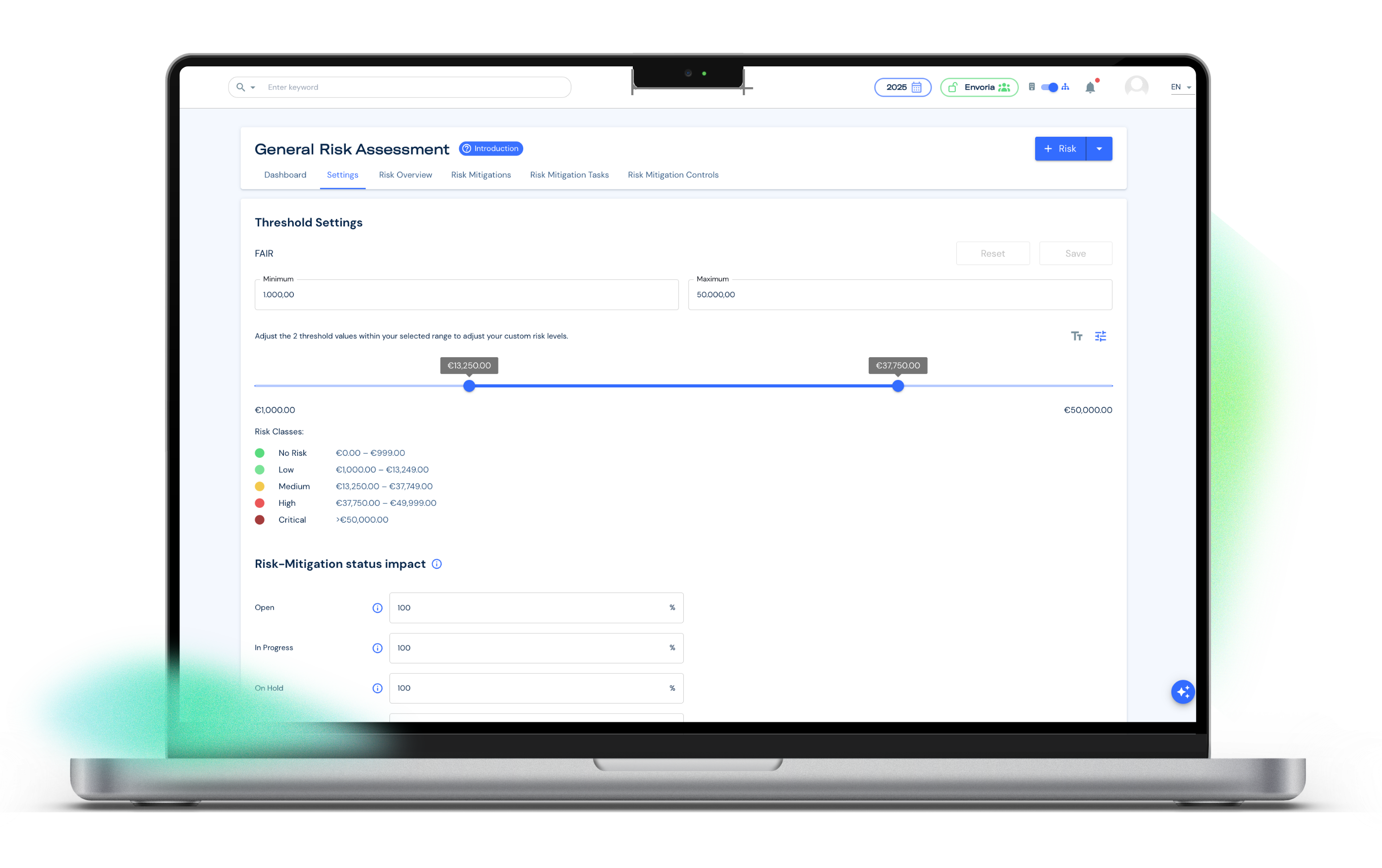
Understanding the possible financial consequences of various risks helps prioritize resources efficiently, ensuring that attention and investment focus on the most critical threats.
With well-defined prevention and response plans in place, your company can reduce damage, protect employees, and recover quickly when unforeseen events occur.
With our new Risk Management module, we empower companies to make well-founded, data-driven decisions in uncertain times. By starting with the FAIR standard, we deliberately offer a flexible, regulation-independent approach, helping businesses assess and prioritize risks, also in financial terms, and strengthen their resilience.
With Envoria’s Risk Management software, companies can easily uncover and assess a wide range of operational, financial, non-financial, and external risks, including:
Fire incidents and water damage
Cyber attacks and system outages
Supply chain interruptions
Legal and compliance violations
Natural disasters
Machine failures and production downtimes
Reputation damage and image crises
Financial losses and liquidity risks
Workplace accidents and personnel shortages
Envoria’s Risk Management tool ensures a transparent and consistent process for identifying, assessing, and addressing risks within your organization. The workflow guides you through every step – from threat detection to follow-up evaluations.
Detect potential threats and clearly specify what is being assessed – whether it’s a process, system, asset, or location.
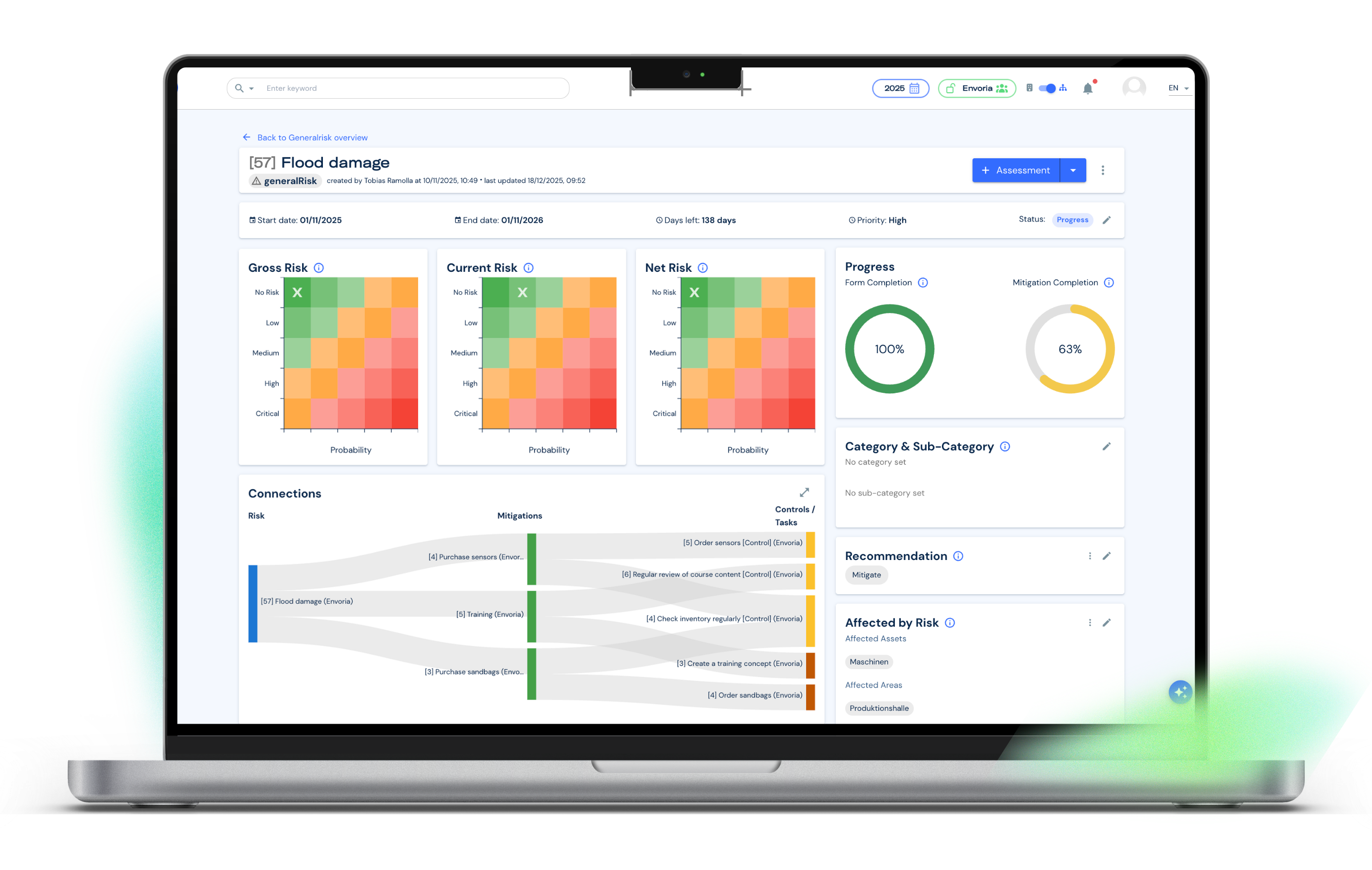
Evaluate the risk type, estimate its likelihood and potential impact, and calculate a risk score for prioritization.
Use the same tool for non-regulated, internal strategies like digital transformation, process optimization or operational improvements.
Define the appropriate response: accept, reduce, transfer, or avoid the risk based on its priority and business relevance.
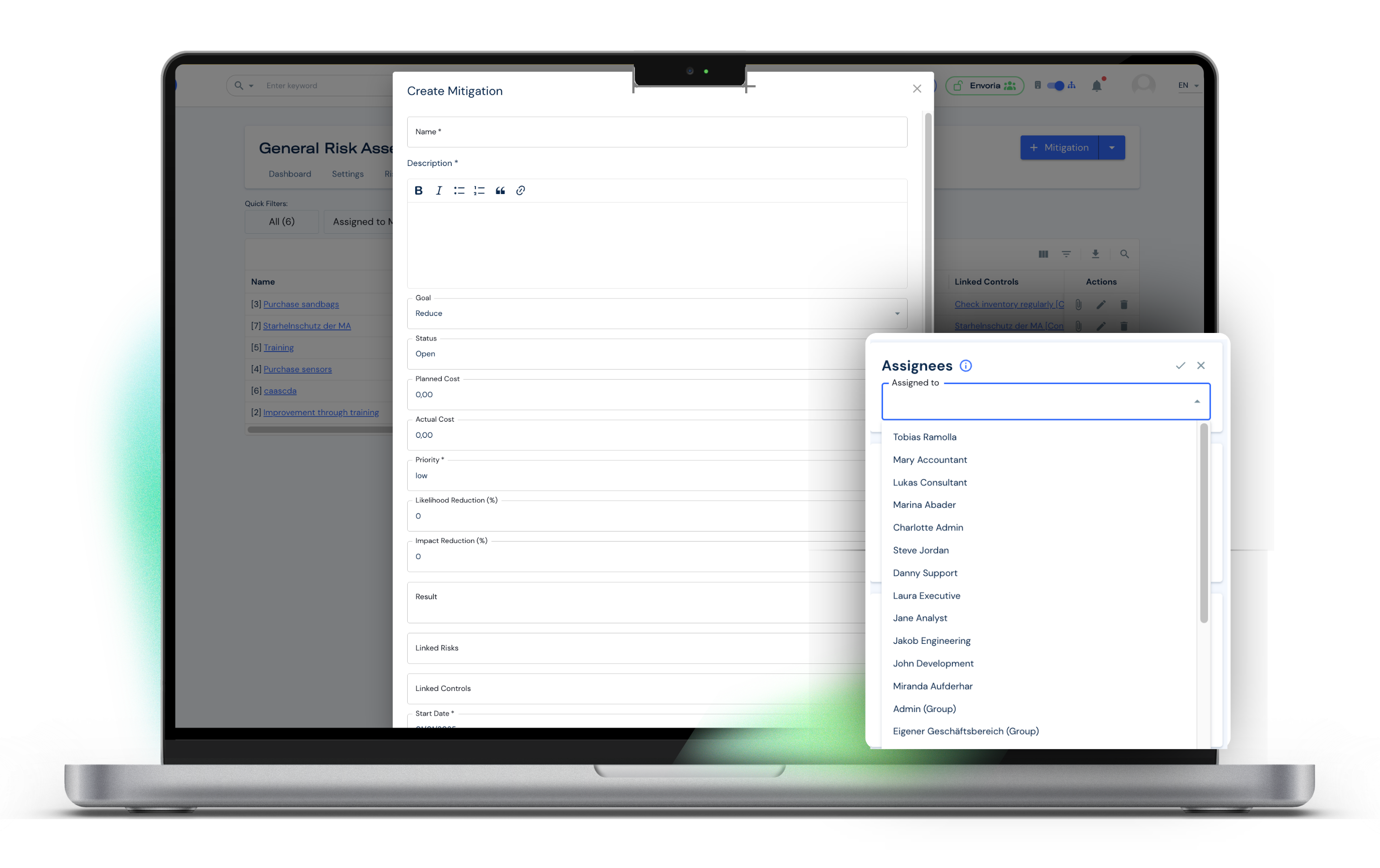
Develop specific mitigation measures, set deadlines, and assign clear responsibilities for implementation.
Schedule follow-up reviews to track progress, adjust measures if necessary, and ensure risks remain under control.
Envoria’s Risk Management module enables your company to systematically identify risks associated with specific assets (e.g., data, employees, and processes) and key business areas (e.g., ESG, data protection, and quality management).The integrated calculation, tracking, and operational allocation of risks transform the system into an effective internal control system (ICS), supporting transparent and audit-proof risk management processes.
Envoria’s Risk Management software is built on the proven FAIT standard, a structured approach for identifying, assessing, and prioritizing risks. This clear framework helps your business assess whether addressing a risk is economically reasonable and where preventive measures make the most sense. FAIT stands for:
Effective risk management is not just about identifying and mitigating risks – it’s about making smart, financially sound decisions. Every risk comes with a potential impact, and every mitigation measure requires resources. That’s why financial evaluation plays a crucial role in prioritizing risks and actions.Envoria’s cost analysis feature will enable businesses to calculate the financial effort required to address a risk and weigh it against the potential financial loss if the risk occurs. This allows decision-makers to focus resources where they deliver the greatest value.
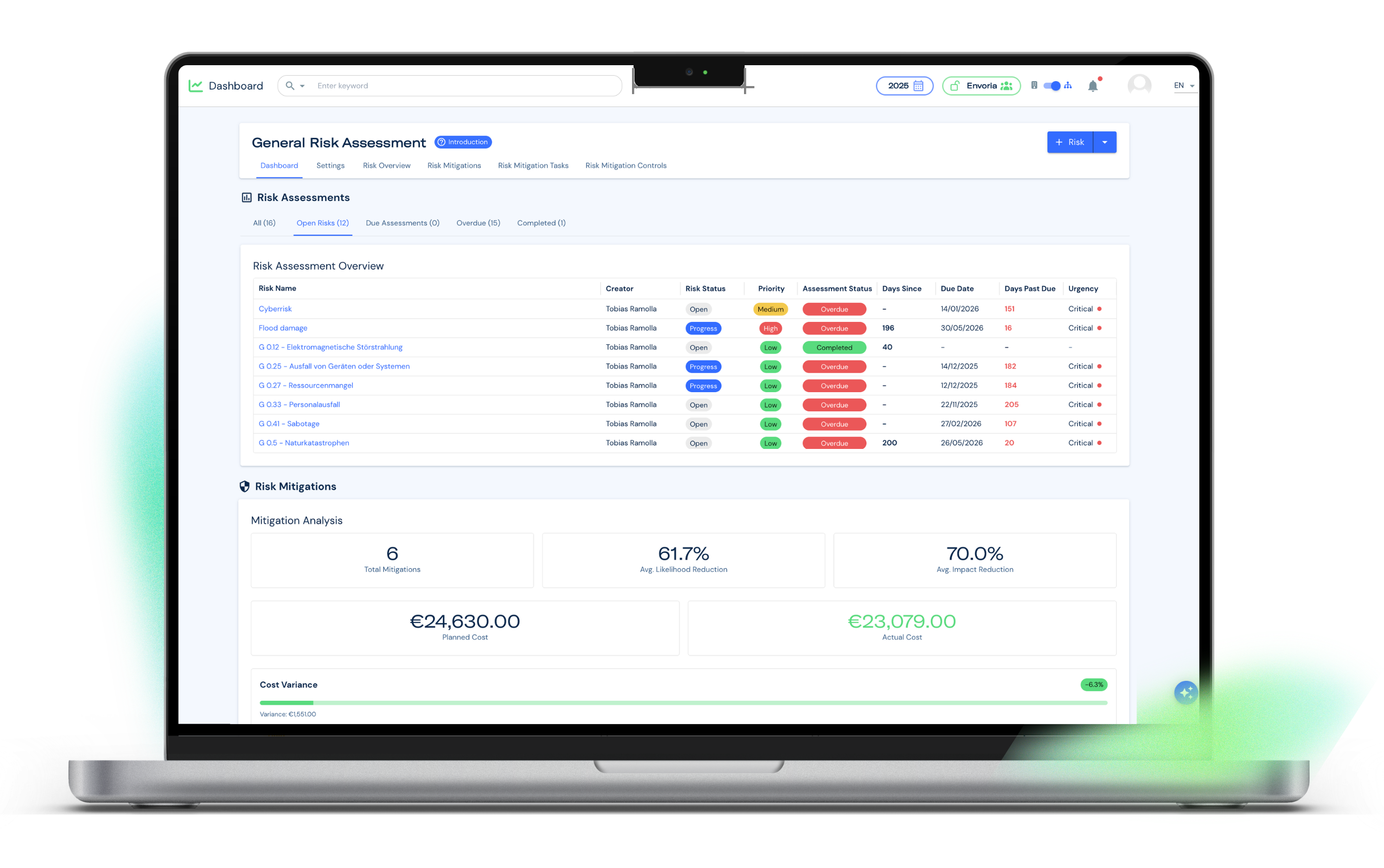
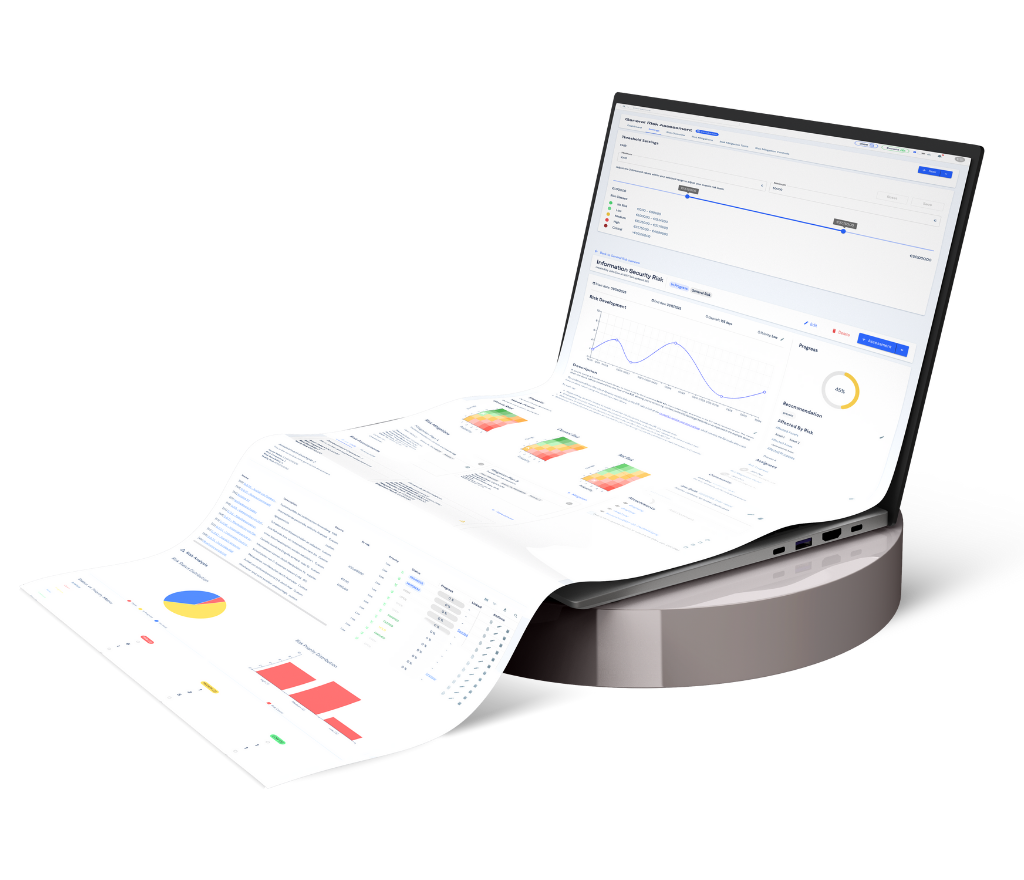
Keep an eye on your company’s risk situation at all times with a clear dashboard. It helps you manage risks efficiently and supports faster, better-informed decisions. The dashboard shows all risks, their potential impact, and the status of mitigation measures, ensuring transparency across your organization.
The risk management tool is built on a comprehensive permission structure that ensures secure and controlled access to all risk-related data. This safeguards sensitive information, ensures compliance, and keeps your processes transparent at all times.
Envoria’s risk management module is built on the FAIR model, offering quantitative, regulator-independent risk analysis.In the next development steps, we’ll integrate additional standards such as ISO 31000 for comprehensive enterprise risk management and FMEA for systematic risk assessment in processes and projects. This continuous expansion ensures that our customers can rely on a flexible, future-ready solution that grows with their business requirements.
Designed to optimize your operative risk management processes
Ensure the consistency and completeness of your risk assessments with automatic validations, minimizing errors from the start.
Automatically calculate risk levels based on defined parameters like probability, impact, and control effectiveness.
Assess the financial feasibility of risk mitigation actions by comparing expected risk reduction against associated costs.
Define individual review frequencies for each risk, ensuring that critical risks are checked and updated at appropriate intervals.
Attach files, certificates, and more to every risk entry for seamless argumentation and audit-ready documentation.
Identify and visualize connections between different risks to manage complex risk structures more effectively.
Distribute responsibilities for each risk and track actions centrally to maintain clear accountability and full process oversight.
Track every change, decision, and action taken on a risk over time. This ensures full traceability and supports audit readiness.
Enterprise Risk Management (ERM) is a structured, company-wide approach to identifying, assessing, and managing risks that could disrupt business operations, financial performance, or corporate reputation. Unlike siloed risk management practices that focus on isolated areas, ERM integrates all types of risks – operational, financial, strategic, and external – into a unified framework. This enables management to gain a holistic understanding of the organization’s overall risk exposure.Implementing Enterprise Risk Management is crucial because it enables businesses to address threats proactively before they escalate into critical incidents. It also strengthens regulatory compliance, improves strategic decision-making, and boosts investor and stakeholder confidence. Moreover, a centralized risk management system ensures consistent documentation, easier audits, and better coordination across departments. Therefore, risk management practices are essential for operational resilience, business continuity, and long-term profitability.Envoria brings ERM into practice by connecting strategic risk insights with operational execution. The platform enables clear risk ownership, links risks to financial impact, and automates review cycles to ensure continuous oversight. Executives gain a real-time view of risk exposure across the entire organization, enabling faster, evidence-based decisions and strengthening the company’s ability to anticipate and respond to disruption.
Envoria’s risk management module is designed to cover a comprehensive range of business risks across multiple categories. This includes operational risks like fire incidents, water damage, equipment malfunctions, production downtimes, as well as strategic and financial risks such as supply chain disruptions, legal compliance issues, and reputation management challenges.Additionally, the system enables you to manage emerging risks, such as cyberattacks, data breaches, and IT system outages, which have become critical threats for businesses of all sizes. Natural disasters and external factors like geopolitical instability can also be integrated into your risk portfolio. This flexibility ensures companies can tailor their risk assessments to their specific operational context and industry standards, maintaining complete control over their risk exposure.
Envoria’s module leverages the FAIR (Factor Analysis of Information Risk) model as its foundation for quantitative risk assessment. Unlike qualitative approaches that rely on subjective risk ratings, FAIR allows organizations to assign financial values to risks, providing a clear monetary perspective on potential business impacts. This is especially valuable for prioritizing risks and justifying mitigation investments to executive leadership and financial stakeholders.In addition to FAIR, the module is designed to integrate further quantitative and semi-quantitative methodologies in future releases, including ISO 31000 for enterprise risk management and FMEA for process-based risk analysis. This multi-framework capability ensures that organizations can combine financial risk modeling with industry-standard best practices for a fully customizable, metrics-driven risk management strategy.
Yes. One of the key features of Envoria’s risk management module is the integrated cost-benefit analysis function. This allows businesses to calculate the expected reduction in financial loss against the projected cost of implementing mitigation actions. By assigning financial values to risks and countermeasures, the system enables you to prioritize mitigation strategies that deliver the highest return on investment (ROI).For example, if mitigating a high-priority risk would require a €20,000 investment but only reduces the potential loss by €1,000, the system would highlight this imbalance, allowing you to allocate resources to other mitigation actions with a more favorable cost-benefit ratio. This ensures that risk management efforts are not only practical but also economically justified – a critical factor for CFOs, risk managers, and compliance officers.
Risk assessments are not a one-time exercise; they require regular updates to remain relevant in an evolving business environment. Regulatory changes, market volatility, new technologies, and organizational restructuring can significantly alter a company’s risk profile. That’s why it’s essential to establish predefined review cycles for each risk, ensuring continuous monitoring and timely updates.Envoria’s module allows users to set individual review intervals for every identified risk, supported by automated reminders and escalation workflows. This ensures no risk is overlooked and guarantees audit-readiness at all times. Regular risk assessments improve strategic resilience, facilitate regulatory compliance, and support informed decision-making, helping businesses stay ahead of emerging threats and industry developments.