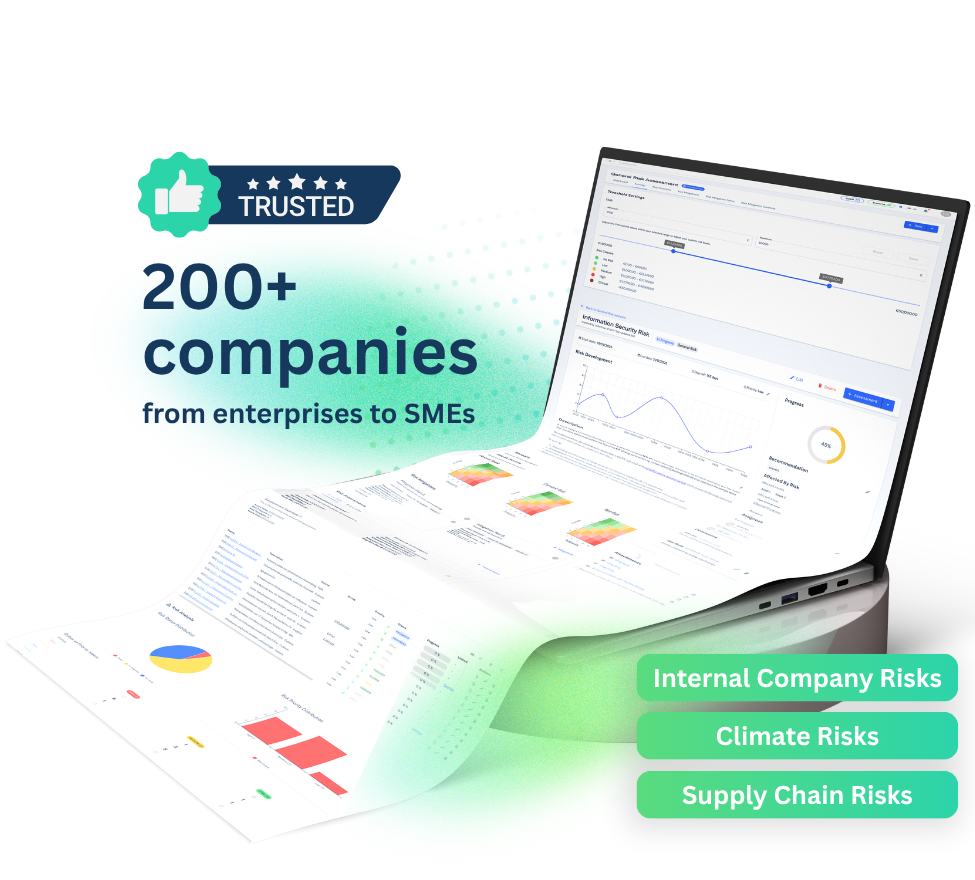
Envoria helps organizations systematically assess risks, quantify their financial impact, and link them directly to mitigation measures and ownership. This enables organizations to manage risks proactively, reduce potential impacts, and make informed decisions about the cost-effectiveness of risk mitigation activities.
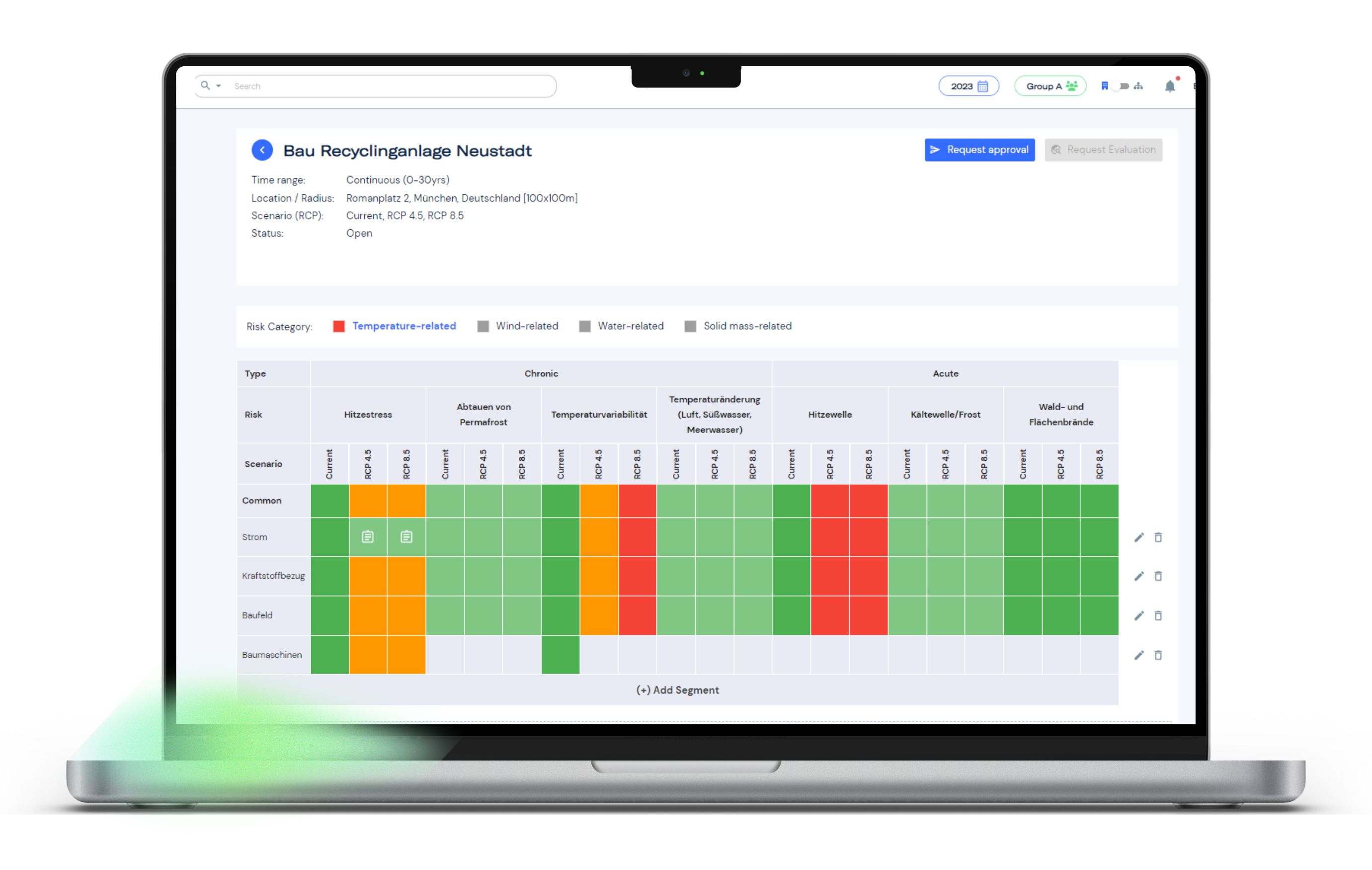
Assess physical climate risks using IPCC climate scenarios and location-specific climate data from thousands of data points worldwide. The analysis provides visibility into the potential impacts of climate change on sites, assets, and business operations, supporting the prioritization of climate risks and adaptation measures.
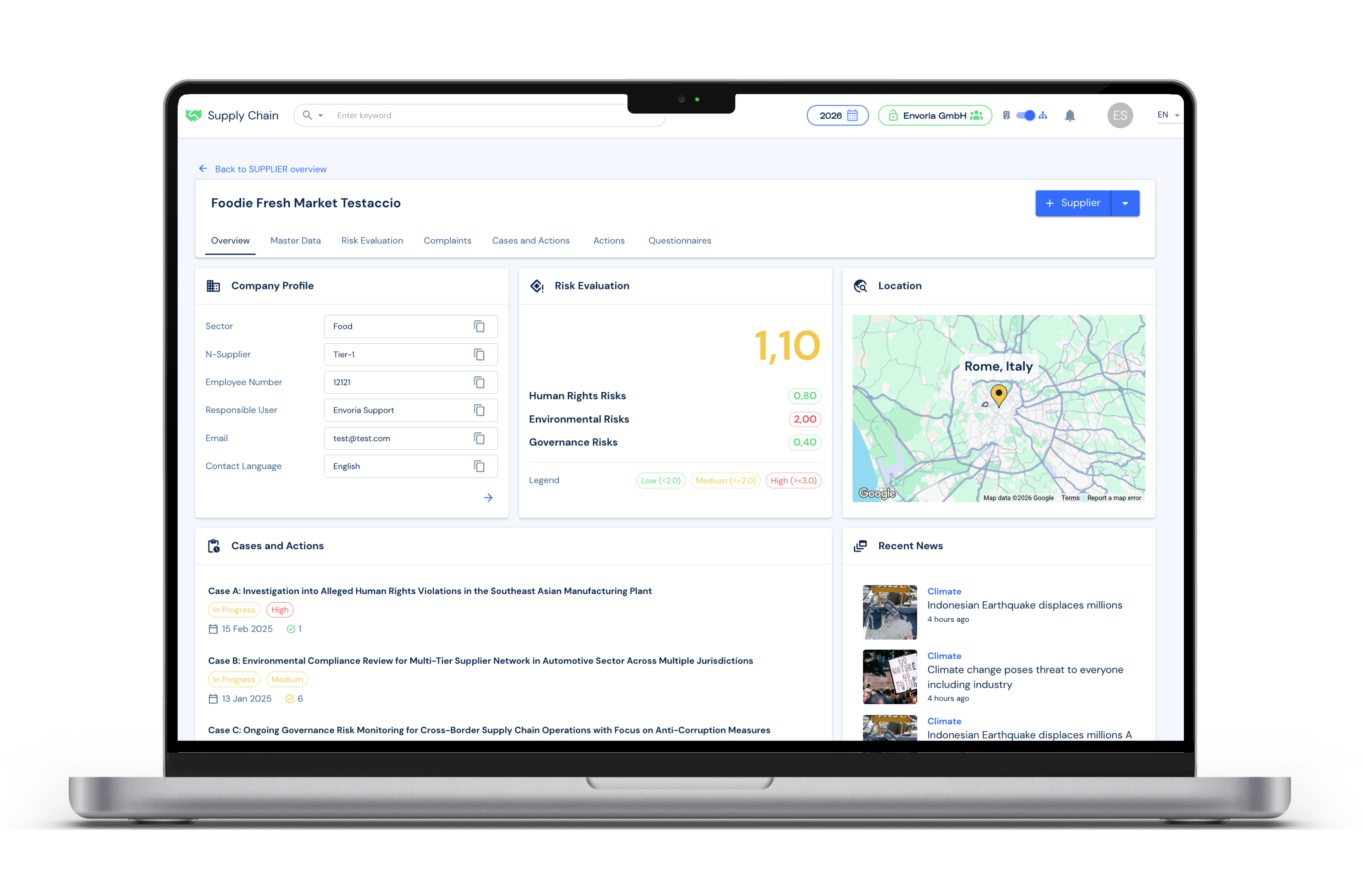
Envoria combines country- and industry-risk data with supplier-specific information to increase transparency and manage supply chain risks. By connecting risk scores, supplier evaluations, complaints, incidents, and corrective actions, organizations can establish a robust foundation for informed decision-making across supply chains.

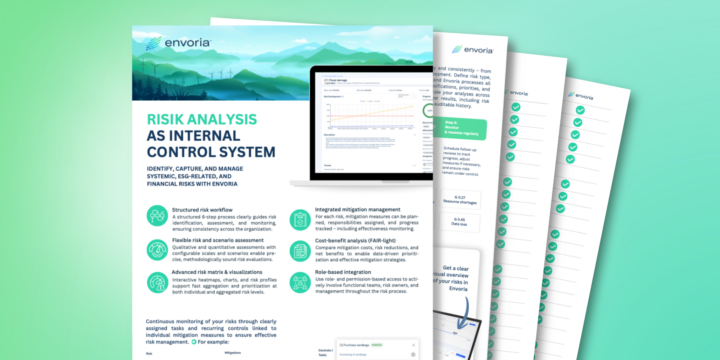

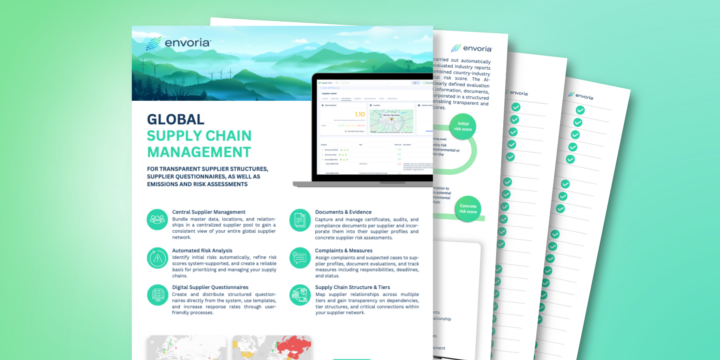


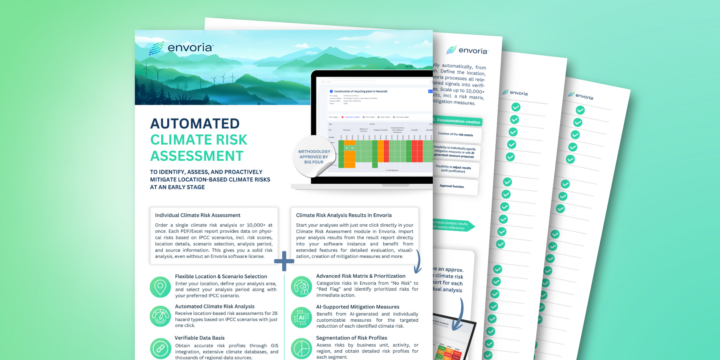

Enterprise, climate, and supply chain risks differ primarily in their scope, underlying data sources, and assessment methodologies. Enterprise risks relate to factors that may affect an organization's ability to achieve its objectives, including operational, strategic, financial, and compliance risks. Climate risks focus on the potential impacts of climate change on sites, assets, and business operations. Supply chain risks relate to risks within the value chain, including supplier-, country-, and industry-related risks, as well as human rights and environmental issues. Because these risk types rely on different data sources and assessment methodologies, they require different approaches to analysis, assessment, and management.
Risk assessment depends on the specific risk type. For enterprise risks, Envoria supports the FAIT methodology, enabling organizations to assess risks based on frequency, impact, detectability, and risk-bearing capacity. Climate risks are assessed using IPCC climate scenarios and location-specific climate data. For supply chain risks, country-, industry-, and supplier-related risks are combined to support the structured assessment and prioritization of risks across the supply chain.
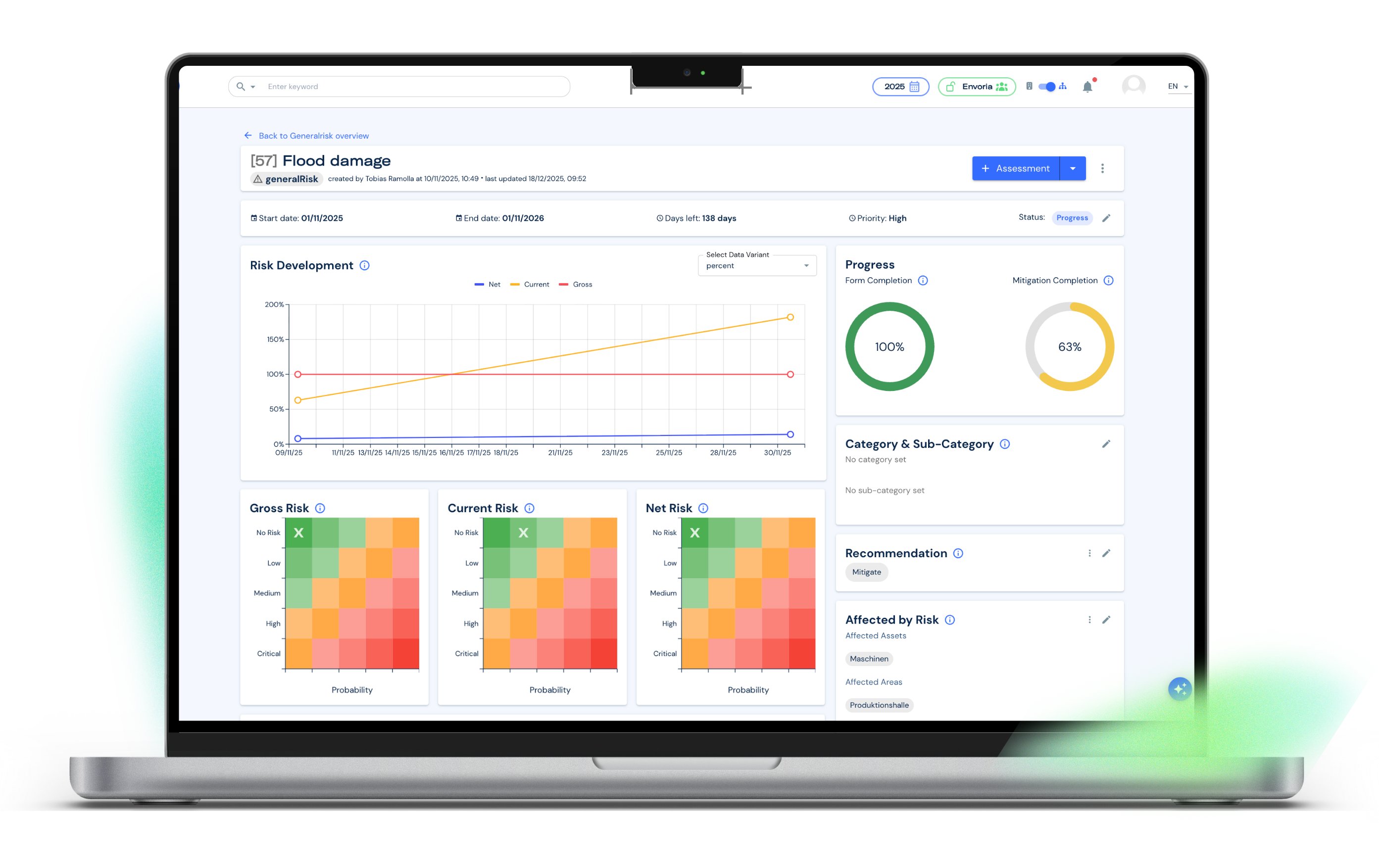
Envoria supports the entire risk management process, from risk identification and assessment to prioritization and action management. Risks can be linked to mitigation measures and controls, responsibilities can be assigned, and implementation progress can be monitored centrally. Risk matrices, heat maps, and risk scores help organizations visualize risks and prioritize mitigation efforts. Residual risks can also be documented and continuously monitored.
Risk assessments play an important role in meeting a wide range of regulatory requirements. Envoria supports organizations in identifying, assessing, documenting, and managing risks in the context of CSDDD, LkSG, CSRD, and the EU Taxonomy. Depending on the use case, risks can be linked to mitigation measures and documented in a transparent and traceable manner to support risk- and due diligence-related requirements.
A risk management platform enables organizations to manage different risk disciplines within a single platform. Risks, mitigation measures, controls, and responsibilities can be managed consistently across different risk types. This reduces data silos, increases transparency, and supports informed decision-making as well as governance, compliance, and due diligence processes.