Does any of this sound familiar?

Should we take down our climate-neutral claim just to be safe?

We don’t have an officially recognized certificate for this at all.

What do we do with the thousands of packages that still carry old claims?

Do we actually have reliable data to support this CO2 claim?

Which sustainability claims are still allowed?

Marketing wants to go live, but Legal still says no.

We urgently need to review all of our sustainability communications.

What data do authorities or advisors actually expect?

Our data is a complete mess. Who is responsible for this?

If one or more of these situations sound familiar, you’re not alone.

Many companies are currently facing the challenge of adapting their sustainability communications to the new requirements of the EmpCo Directive in the fight against greenwashing. And this is no longer just about individual marketing claims – it is about reliable data, traceable processes and proper documentation.

This is exactly where Envoria and its partner network come in.
EmpCo changes more than just packaging

When companies think about EmpCo, product packaging is often the first thing that comes to mind. In practice, many companies are currently reviewing environmental claims, removing sustainability statements or making short-term changes to their packaging. At the same time, numerous marketing materials and website contents are being updated.

But that is only the tip of the iceberg. The real challenge begins where sustainability claims need to be backed up with reliable evidence. This requires emissions data, KPIs, supplier information, strategies and documentation to be brought together – often from different departments and systems.

EmpCo is therefore more than just a marketing issue.
It is a data, process and organisational challenge.

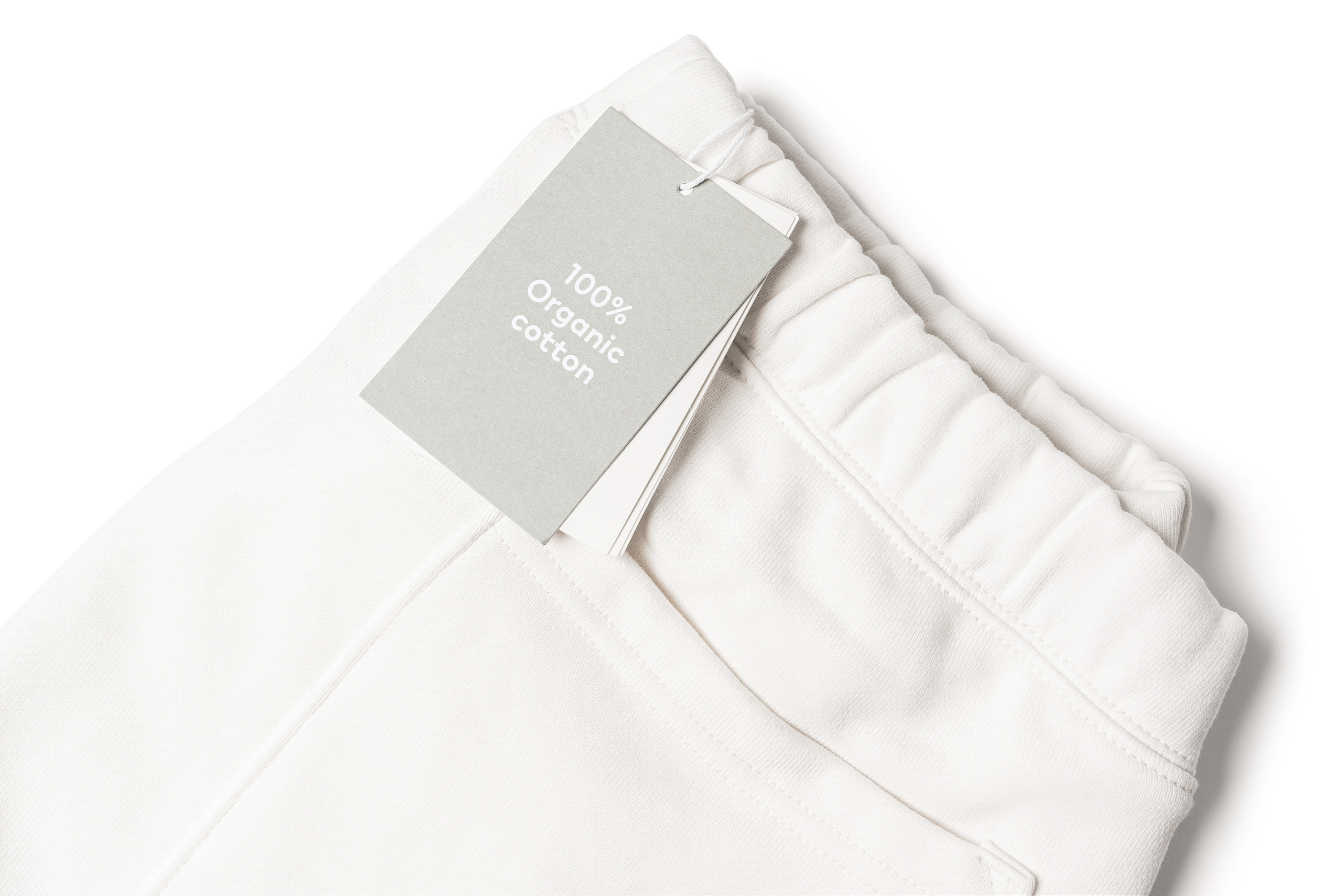
100 organic cotton

EmpCo introduces new requirements for sustainability claims

In future, simply making a “green” claim will no longer be enough. Companies must be able to clearly demonstrate what their environmental and sustainability claims are based on.

“Our product is climate-neutral.”

  • How was this calculated?
  • Is the claim based on emissions reductions or solely on offsetting?
  • What data supports the claim?

“We will reach Net Zero by 2040.”

  • Is there a documented strategy?
  • Have specific measures and interim targets been defined?
  • Can progress be demonstrated?

“Our product is sustainable.”

  • What exactly does this claim refer to?
  • Is there reliable evidence or certification?
  • Is the claim clear and understandable for consumers

“We have reduced our CO₂ emissions.”

  • Which emissions were included?
  • Which calculation method was used?
  • Are the results documented?

0

From this date, the new EmpCo rules apply in EU Member States.

0

Existing communications must be updated by the deadline.

0

Non-compliant claims can lead to costly legal action and required changes.

0

EmpCo affects websites, packaging, advertising, and other B2C use cases.

EmpCo: What companies can do in the short term

With the EmpCo Directive taking effect on September 27, many companies have little time left. If you have not yet reviewed your sustainability communications, now is the time to identify the biggest risks and prioritize the most important actions.

Capture all environmental & sustainability claims

Create a complete overview of all environmental and sustainability claims – across packaging, websites, product pages, brochures, social media and other marketing materials.


Assess risks & review existing evidence

Assess which claims are particularly critical and check whether reliable evidence, data, or certificates are available. Start by prioritizing claims with high visibility and the greatest legal risk.

Prioritise actions & update communications

Determine which packaging, websites, product information or marketing materials need to be updated in the short term. Start with the measures that will have the greatest impact on reducing your risk.

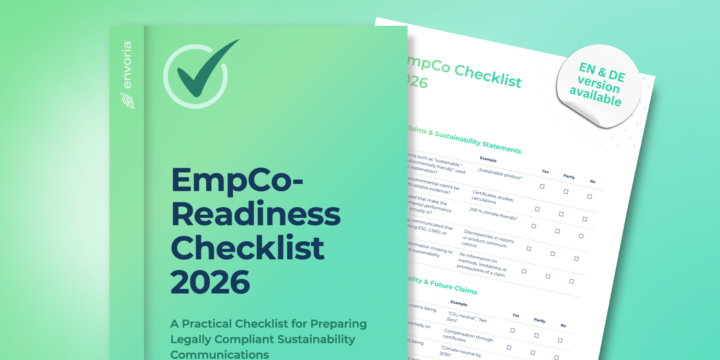
Use our EmpCo Readiness Checklist to assess, step by step, how well prepared you already are for the EmpCo Directive.

Tackle EmpCo with the right experts

Where does your company currently stand on EmpCo? And which measures should take priority now? A range of partners from our network support companies in assessing their situation and implementing the directive. Find the right contact for your individual needs.

Grant Thornton Austria

EmpCo: What companies should build for the long term

Reviewing existing claims in the short term is only the first step. In the long term, sustainability information needs to be organized so that new claims can be reliably substantiated whenever greenwashing concerns arise.

Centralize sustainability data

Manage emissions, KPIs, documentation and other ESG data in one central location instead of spreading it across Excel files and standalone solutions.

Be able to substantiate claims at any time

Create a traceable basis for environmental and sustainability claims, including calculations, documentation and supporting evidence.

Establish repeatable processes

Ensure that new sustainability claims follow a consistent review and approval process.

Connect Marketing, Sustainability and Compliance

Create a shared data foundation so that everyone involved works with the same information.

Track progress transparently

Continuously track measures, KPIs and targets and document their development in a traceable way.

Be ready to provide information at any time

Ensure that relevant information, calculations and evidence are quickly available – without time-consuming research across different departments.

How Envoria can support you with EmpCo

With Envoria, you can use exactly the software modules and features you need for your EmpCo requirements. This creates a structured foundation for your data, strategies and evidence – and for substantiated sustainability claims.

KPI Management

Support sustainability claims with reliable KPIs

Capture and manage relevant sustainability KPIs centrally and document their development in a traceable way.

Emissions Management

Put CO2 claims on a reliable data foundation

Calculate, document, and analyze emissions, and make progress on reductions transparent and traceable.

Supply Chain Management

Capture sustainability information from your supply chain in a structured way

Bring together relevant supplier information and create transparency around sustainability data and risks across your supply chain.

Strategy Management

Back sustainability targets with a concrete strategy

Translate long-term targets such as Net Zero into strategies, interim targets, and concrete measures, and document progress.

Action Management

Turn commitments into demonstrable progress

Plan and manage sustainability measures and clearly demonstrate which activities contribute to achieving your targets.

Documentation & Evidence

Make evidence available where it is needed

Store documents and other supporting evidence in a structured way in the Document Hub, creating a traceable basis for your sustainability information.

Take the right approach to EmpCo now

Whether you want to structure your sustainability data for the long term or need expert support with implementing EmpCo: with Envoria and our strong partner network, you can find the right approach for your requirements.

More resources on EmpCo

Article The Emp Co Directive and its implications for sustainability communication
ARTICLE

The EmpCo Directive and its impact on sustainability communications

Read more
Envoria Emp Co Readiness Checklist
CHECKLIST

EmpCo Readiness Checklist 2026

Download now
Article How transparency prevents greenwashing
ARTICLE

How transparency prevents greenwashing

Read more
Strategic decision making with ESG data
ARTICLE

More than compliance: Strategic decision-making with ESG data

Read more

FAQs

The new EmpCo rules apply from September 27, 2026. They affect companies that communicate with or sell to consumers and use environmental or sustainability claims. Relevant touchpoints include product packaging, websites and online shops, advertising, social media and sales materials. Brand, product, or company names may also be relevant when connected to environmental claims.

General environmental claims such as “sustainable”, “environmentally friendly” or “green” will be subject to significantly stricter restrictions and may only be used under certain conditions. Climate-neutrality claims are particularly relevant: product-related claims about neutral, reduced, or positive environmental impacts must not be based on the offsetting of greenhouse gas emissions. Companies should therefore not assume that having evidence automatically makes every claim permissible.

In the future, sustainability labels may generally only be used if they are based on a certification scheme or established by public authorities. Companies should therefore review their own labels and sustainability seals in particular and determine whether they meet the new requirements. A certificate alone also does not automatically make every associated sustainability claim permissible.

Claims about future environmental performance are also subject to stricter requirements. Future claims must be based on clear, objective, publicly available, and verifiable commitments and targets, and supported by a realistic implementation plan; progress must be regularly verified by an independent third party. An ambitious climate target alone is therefore not sufficient.

Envoria helps companies build and manage the data foundation behind their sustainability communications in a structured way. Depending on the use case, this can include calculating and documenting emissions data, managing sustainability KPIs, tracking strategies and measures, or centrally storing documents and supporting evidence.

This enables relevant information to be managed in a structured way over the long term and makes it easier to trace and substantiate, for example, CO₂ reductions, sustainability KPIs, or progress towards long-term climate targets.